Language has the Power to Influence

img_0454.jpg

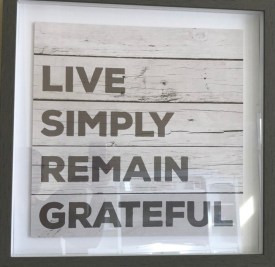
I have been spending time everyday, typically mornings, talking with my dad on the phone. He’s almost 76 and is really at a point in his life where the core of his being is who he is and often times when I try to say something different from him, he says, “Jennifer, you need to listen to your old dad. I’ve been around for a while and I know.” I have been taking a lot of time just listening to him and what he has to say. I’ve been impressed with his way of  living – a life that is a beautiful kind of simple. He reminds me often that I need to slow down, he encourages me to follow my dreams and to write – start now – don’t wait, and he makes me laugh so hard. His words, every day, influence me in my thinking. They have made me look at life differently and realize that slowing down is important. This feedback from him was from the heart and I know he’s right. I need to slow down. He did not say anything negative toward me in regards to the fast paced life I live, instead he models a simple life, shares his life, and said two words “slow down.” Those two words have lingered in my soul for the past few weeks.

My dad’s words have influenced me. They have all my life and they are a perfect example of how language can influence what we do on a daily basis. The words we use, the tone of our language, has the power to influence. I’ve seen this in the workplace, at Studio G where I workout, with my run group, on social media, and really, everywhere I go. The words that are used have the power to influence in both positive and negative ways.  This is not “new news” as many have discussed the power of our words: James Gee (who studies discourse closely), Lave & Wenger (in their work with community of practice), Holland & Skinner (as they discuss identities within a figured world), Peter Johnston (who discusses using choice words in the classroom) and many more. Many of these authors discuss in some form or fashion how our identity is formed by those around us, the communities with which we participate, and the words that are said within those communities. Language is powerful.

Knowing the power of language and it’s ability to influence, it is our moral imperative to truly think before we speak. It’s not just a “cliché” that has been handed down over the years, it is the truth. We need to recognize how what we say and how we say it influences others. Life is about influencing others. There are 5 things I hold dear as I think about those that influence me and those that I influence.

  1. Be honest. In order to influence, you first need to be honest. If you are not transparent in your thinking and honest with what you say, then it will be a false influence that will not be sustained.
  2. Have a growth mindset. You need to be willing to look at everything from a growth mindset (Dweck, 2007). We all can achieve if we are determined, use initiative, are resilient, and so much more. We have to realize that being successful is not “born” it’s “developed.” When working with others, approaching your work with them using a growth mindset can encourage and nudge them to greatness.
  3. Be vulnerable. Vulnerability is important. Brene Brown (2012) discusses vulnerability in her book, Daring Greatly. A great read if you have not read it yet! By being vulnerable we show that we are human and our actions help nudge others. Being vulnerable allows others to see that you mess up too. Through our vulnerability, we share our stories in hopes that others can learn and grow.
  4. Have a sense of humor. We all need to laugh every now and then and we need to share that laughter with others.  I recently read an article, Laughter is the Best Medicine, where I learned laughter relaxes you, boosts your immune system, protects the heart, and may even help you live longer?
  5. Lead with heart. This one is so vital. Relationships are at the core of what we do, therefore when thinking about influence it is not enough to just know what to say or do; you have to genuinely care about what you’re saying and doing. You must put the other’s interest at the center, listen, learn and then share your “words” with them.

I reflect on these five areas and realize that this is what I strive for in my relationship with my dad right now, in my career as an educator and a fitness coach/instructor, with my friends and so much more. By being honest, having a growth mindset, being vulnerable, having a sense of humor and leading with heart I know I can influence others as they have influenced me. It is through the words I use in these 5 areas that I can truly make an impact. So can you.

A Reminder: Why Language Matters

IMG_4255
The Super Bowl. Everyone gathers around food, drink and game to cheer on a favorite team. Well, some do that. Others are watching the commercials- determining what they like and don’t like. Then there’s those that say, “stop interrupting my JT concert with the football game!” We all have different purposes for the reasons why we gather around the television to share a common experience with the Super Bowl yet our perspectives are different depending on our focus – our why.
This why transcends into everything we do. Why we do something matters. As Simon Sinek says, you must know your why before you can get into the what and how. Today, as I listened to Lucy Calkins, Natalie Louis, Celeste Larkey, and Shanna Schwartz at Teachers College Reading & Writing Project I was reminded how important the why is in the classroom. Natalie Louis shared “You should know why – always. You should never do anything in your teaching that you cannot answer why… otherwise how do you make choices in your teaching?” Natalie spoke from the heart. She spoke from experience – sharing the feedback she had received from Lucy Calkins. So why is the language we use in the classroom so important?
  • Our language has the power to influence.
  • Our language has the power to create identities.
  • Our language has the power to bring a community together.
  • Our language has the power to change our environment.
  • Our language has the power to defeat the odds.
  • Our language has the power to transform.
There are so many reasons why our language is important and why we have to choose our words carefully. Throughout the next six weeks, we will dig deeper into each of the above “whys” listed \to see how our words have power and purpose to transform our community.
So, as I finish my blog while watching the game at a local pub in New York, I hear, in unison, everyone harmoniously singing the lyrics of stand by me – a commercial that brought everyone to song. I’m reminded that song, that words, stick with us. The meaning that runs through what we sing brings us all together. It’s underlying why gives us hope as we know we have so many in our lives that stand by us. Knowing this, think about the following:
  • How are you that hope in someone else’s life?
  • How are you using your language to affect those around you?
  • How are you remembering that our words matter?


Struggling or striving… words matter.

img_1058.jpg

I am struggling with my writing today. When I struggle I often resort back to wondering why I am even doing this work. Why have I decided that no matter what, every Sunday, I am going to write; I am going to post something new to my blog. The word struggle has a negative connotation to it. It’s not a good thing. In life we don’t like to struggle.  I struggled growing up with my self image. My mom struggled to make sure our life seemed “normal” (whatever normal is?). I struggled with truly comprehending what I read. I had to read it again and again to make sense of it. It wasn’t a good thing to “struggle” yet all my life my struggles have helped me be stronger.

I am then reminded of hearing Ellin Oliver Keene speak one time and she said, “Savor the struggle.” I have held onto this idea that we should savor the struggle. When looking at it through this lens, the “struggle” is positive, right? Yet, in education (and life), we often use this word to define someone. We might say that a child is a “struggling reader” or a “struggling writer” and this is seen as the child being behind (another concept to grapple with). I’m going to be honest. I don’t like it when we define someone as “a struggler.” We all struggle. We all are working through something and trying to learn and grow.

So what words might I use instead? I don’t think “the struggle” itself is negative, it’s identifying someone as struggling. Instead, let’s think of different identifiers. Let’s think of using words such as striving readers and writers or developing readers and writers. When looking at it this way we all are striving or developing in some way. When I work with a child (or colleague), my goal is to find out what his/her next steps are… what are they striving for? What is it that they need help with developing next?

So yes, I am struggling but I don’t consider myself a struggling writer. I have many strategies and words to use to put on the page, yet sometimes I don’t know what direction to go. I am a striving writer- one that is developing who I am as a writer and wondering where this road may take me.

The words we use to describe ourselves and one another impact identity. “Personal identity is not something that we find by looking at ourselves in the mirror, nor is it given to us by the efforts and opinions of others. Identity is constructed from the way others influence the way we behave and see ourselves. We learn from the company we keep, and the greatest learning is generated by our perception of the way other people see us” (Smith, 2006, 91). It is important to think about the language we use and how that builds an identity for someone else. If I am seen as a “struggling writer” then I will enact that identity. If the responses I receive from others do not lift me up rather make me feel badly about my writing then I will retreat and not want to write anymore. It is our responsibility to use our words and “labels” to build others up. Next time you are in a conversation and want to identify someone as struggling I urge you to change your language and talk about that person as “striving” or “developing” or possibly use another word. A simple shift in language can begin to influence the way you see that person as well as how that person sees him/herself.

I am not going to identify as a struggling writer. I am a striving writer who is choosing to take this moment to savor the struggle.

References:

Smith, F. (2006). Ourselves: Why we are who we are. Mahwah, New Jersey: Lawrence Erlbaum   Associates.

Our Song, Our Words…

Screen Shot 2018-01-21 at 7.22.37 AM

Music… it’s a universal language, right? Think about how we all connect to the rhythm of a song or the message it’s trying to portray. Think about how it is empowering to sing along and say the same words, and with all of your heart – mean it! Music tells a story. Life is about telling our story. And within our story, guess what, words matter.

I’ve reflected a lot over my years as an educator on what we say and how we say it. The power of our words is far beyond our understanding of what the power truly is like. I’m sure you are thinking, what does that mean? Well, think about it. You sing lyrics to a song. Over and over and over. Those lyrics have meaning yet do we really understand the power of those words from the talented artists that created them. Probably not. Those words come with history. Those words come with experience. Those words come from the heart. It is hard to replicate what we can’t understand, yet what if the power of words allows us to do more? What if the power of our words allows us to create a new identity? What if the power of our words leads us on a different path?

Guess what? I believe it does. My next series over the next few weeks will deal with the power of our words. First, I will look at that power in education. Then I will look at it in various other areas of life. My world is about using words and language to help others believe in who they can be – who they are and who they will be. My world is about creating conditions for others to build a strong and positive identity about themselves. My world is about kindness, compassion, love, excitement, and more. My world is influenced by my words and the words of others. I look forward to digging into “semantics” over the next few weeks. Yes, it may be something others laugh at, but to me our words are life so how we use them matter. We create our own song through our words.

One little word… or more?

As I’ve read through my twitter feed, I’ve noticed many posts at the beginning of the year where colleagues, friends, professionals, and more have been sharing their “one word” for the year – a word to focus on for an entire year. A word that is remembered day in and day out to help find focus. A word… a word… a word…

Then, in a meeting the other day, someone asked me – why does it have to be one word? Why only one? I gave a response and moved on yet am wondering the same thing now. Why just one word? It could be a phrase? It could be multiple words? Or it could be one word? So, because I’m having trouble choosing and in life I tend to focus on multiple things at a time, I am choosing more than one word. I have three:

Simplicity.

Time.

Vulnerability.

Why these three? Really, it’s because I can’t choose which one I want to focus on most. All three have meaning to me and all three will help move me forward this year as I work with others. Also- I like things that come in threes. My mom used to say “all things come in threes” – typically she was referring to bad things – you know, “when it rains, it pours.” Yet, I like to perceive it as the glass half full – you know the positive side. So when we say all things come in threes, why not the good? Of course my choices could be seen in a negative way by some, yet for me… these three words are what I need to remember to continue on this journey called life where I continuously grow myself and hopefully influence others.

Word #1: Simplicity.

I recently read Regie Routman’s, book Read, Write, Lead. She discusses the importance of simplicity and shared a quote from Steve Jobs, “Simplicity is the ultimate sophistication.” Powerful. If we live more simply, lead more simply, we gain so much more. Makes sense? So what does simplicity mean to me? It means clarity. It means plain/natural. It means being easy to understand. By thinking about simplicity in my life, it means being true to who I am, communicating well with others, and working toward finding clarity in the work I do, day in and day out. Simplicity means that I am living a life that holds my values at the core – everything I do connects and means something in relation to what I believe. Simplicity means I do not let the negative energy keep me down, instead I take that energy and use it differently. Simplicity means that I work toward living simply – keeping relationships at the heart of why I do what I do.

Word #2: Time.

So… time. Whenever I enter a meeting and we are discussing a to do list or asking what do you need, time is inevitable mentioned. When I’m working out with others, we are talking about needing more time to get it all in. We I am talking to my sister at a family gathering, we discuss not having enough time to do it all. Well, in reality, time is all we have. It is how we use that time that matters. I’m hopeful to look at the word time differently this year and instead of saying I need more time, I want to ask the question, “How am I using my time?” I want to think about prioritizing my both my personal and professional life and I want to work toward my “why” (a future blog post) through my decisions on how I use time. Next time you hear me say I need more time, kindly remind me that time is all we have. It will be that gentle nudge I need to move forward.

Word #3: Vulnerability.

Awwwww! Vulnerability. This can be scary. In fact, some think it is not good to be vulnerable that you have to always seem like you know what your doing, yet I’ve learned in life that people love you for you and it makes you more human when you can show that you are learning too; that you make mistakes too; and that you are a work in progress. We do not strive for perfection, we strive to learn and grow. It’s through these experiences that we become a better person. Even those experiences that are undesirable challenge us in ways that make us who we are. It’ show we respond. I want to see vulnerability as an asset. I want to channel Brene’s Brown’s words from Daring Greatly. I want to live a vulnerable life. Though this is something I think I do both in my personal and professional life, I want to continue to keep it at the forefront. By being vulnerable I am challenging what I know now to come to new understandings later. By being vulnerable I hope to influence others to be vulnerable too.

So, how do these three words work together for me? Well, living simply will allow me to utilize my time effectively/efficiently and assist me in being vulnerable. Focus is key and these three words intertwined give me that focus.

Now I do realize that the “one word” movement has meaning so by using three I am not trying to denounce the meaning of one word. It is powerful. I just now have “three” powerful one words.

There you have it. My first blog post that I also hope emulates what these three words mean to me. Simplicity in what I choose to write about, carving time to write, and being vulnerable to put my words out there. Looking forward to growing my writing through blogging and sharing ideas with others. Happy writing and until next time…